Quick Answer:
-
Yes, foreigners can buy property in Australia but only under strict Foreign Investment Review Board (FIRB) approval conditions, which vary significantly based on visa status and property type
-
Non-residents are generally banned from purchasing established Australian homes and face application fees ranging from AUD 4,200 to over AUD 1 million depending on property value
-
Foreign buyers pay state government stamp duty surcharges of 7 to 8% on top of standard rates across New South Wales, Victoria, Queensland, and other states
-
Temporary residents may purchase one established dwelling as a principal place of residence but must sell it when leaving Australia permanently
-
Dubai offers a significantly simpler alternative where foreigners hold full freehold ownership rights with zero restrictions, zero stamp duty, and zero tax on rental income
The question of whether foreigners can buy property in Australia has a complicated answer in 2026. The short answer is yes, under specific conditions.
The longer answer involves understanding a layered framework of federal FIRB approvals, state government surcharges, visa-based purchase restrictions, and ongoing tax obligations that add high cost and complexity compared to most international property markets.
This guide explains exactly what the rules are, what they cost, and why many foreign investors are choosing Dubai as a more accessible, tax-efficient alternative in 2026.
Foreign Buyer Rules Australia
Understanding whether foreigners can buy property in Australia starts with the Foreign Investment Review Board. FIRB is the federal body that governs all foreign property purchases in the country.
FIRB Framework Explained
The Foreign Investment Review Board administers Australia's foreign investment policy under the Foreign Acquisitions and Takeovers Act 1975. According to the Australian Taxation Office, the ATO now administers the foreign investment framework on behalf of the Treasurer, handling all applications and fee collection.
Foreigners can buy property in Australia only after receiving FIRB approval for most purchase categories. Applications must be submitted and approved before the purchase contract is signed. Proceeding without approval is a criminal offence under Australian law and can result in forced divestment of the property.
The FIRB framework distinguishes between different buyer categories including non-residents, temporary residents, and foreign government investors. Each category faces different rules about which properties can be purchased and under what conditions.
Who Needs Approval
Most foreigners asking whether they can buy property in Australia will require FIRB approval. Foreign persons are defined as individuals not ordinarily resident in Australia, foreign corporations, and foreign government entities. Temporary visa holders, including those on student visas, 457 or 482 skilled worker visas, and working holiday visas generally qualify as foreign persons under the framework.
Australian citizens and permanent residents are fully exempt from FIRB requirements regardless of where they live. New Zealand citizens are also exempt under specific treaty provisions. All other foreign nationals must apply for and receive FIRB approval before they can buy property in Australia legally.
Foreigners can buy property in Australia through jointly-owned purchases with Australian citizens or permanent residents in some cases. However, the foreign party's interest still requires separate FIRB approval even in joint ownership arrangements.
Approved Property Types
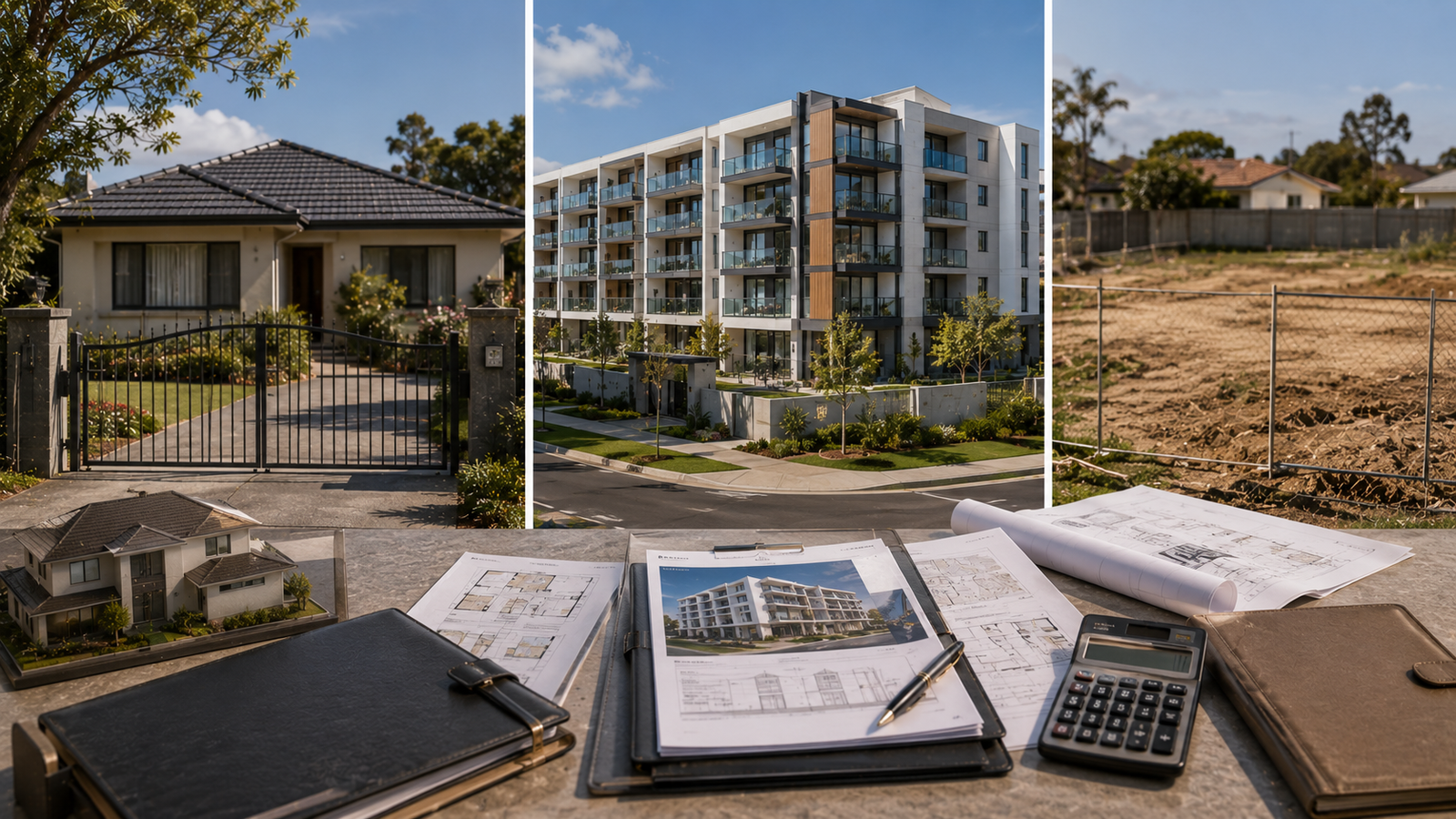
The type of property foreigners can buy in Australia is heavily restricted based on residency status. Non-resident foreigners are generally prohibited from purchasing established residential dwellings, which constitute the vast majority of Australian housing stock. They are permitted to purchase newly built dwellings and vacant land for development under FIRB approval.
Temporary residents can buy property in Australia in the form of one established dwelling, but only to use as a principal place of residence. They cannot rent it out or hold it as an investment. On departing Australia permanently, they are required to sell the property within a defined timeframe.
The restriction on established homes significantly limits where foreigners can buy property in Australia compared to markets like Dubai, where all freehold zones are fully accessible to any foreign national without restriction.
Costs and Tax Implications
Understanding the full cost of buying property in Australia as a foreigner reveals why many international investors are turning to alternative markets in 2026.
FIRB Application Fees
FIRB application fees for foreigners buying property in Australia are substantial and scale with the property value. According to the Australian Taxation Office foreign investment fee schedule, residential property application fees in 2026 are structured as follows:
|
Property Value (AUD) |
FIRB Application Fee (AUD) |
|
Under 75,000 |
4,200 |
|
75,000 to 1,000,000 |
14,100 |
|
1,000,001 to 2,000,000 |
28,200 |
|
2,000,001 to 3,000,000 |
56,400 |
|
Each additional AUD 1,000,000 |
28,200 |
These fees are non-refundable regardless of the purchase outcome. A foreigner buying a standard AUD 1.5 million Sydney apartment pays AUD 28,200 in FIRB fees before the purchase even proceeds.
Stamp Duty Surcharges
In addition to FIRB fees, foreigners buying property in Australia face state government stamp duty surcharges applied on top of standard stamp duty rates. These surcharges vary by state but represent a significant additional cost burden. According to Revenue NSW, the foreign buyer duty surcharge rates across major states are:
|
State |
Foreign Buyer Surcharge |
Standard Stamp Duty (approx.) |
Total Effective Rate (approx.) |
|
New South Wales |
8% |
4 to 5% |
12 to 13% |
|
Victoria |
8% |
4.5 to 5.5% |
12.5 to 13.5% |
|
Queensland |
7% |
3.5 to 4.5% |
10.5 to 11.5% |
|
South Australia |
7% |
3.5 to 5.5% |
10.5 to 12.5% |
|
Western Australia |
7% |
3 to 5% |
10 to 12% |
A foreign buyer purchasing an AUD 1 million property in New South Wales faces approximately AUD 130,000 in total stamp duty costs. This compares to zero stamp duty on any Dubai property for sale in designated freehold zones for foreign buyers.
Ongoing Tax Rules
Foreigners who successfully buy property in Australia face ongoing tax obligations that further reduce net investment returns. The ATO taxes rental income earned by non-resident foreign investors at a flat 30% rate with no tax-free threshold available. Capital gains on eventual sale are also taxable, with non-residents ineligible for the 50% CGT discount available to Australian residents.
Foreign owners of residential property in Australia also face potential application of the Annual Vacancy Fee if the property is not occupied or genuinely available for rent for at least six months per year. This fee equals the original FIRB application fee and applies annually until the property is sold or occupied.
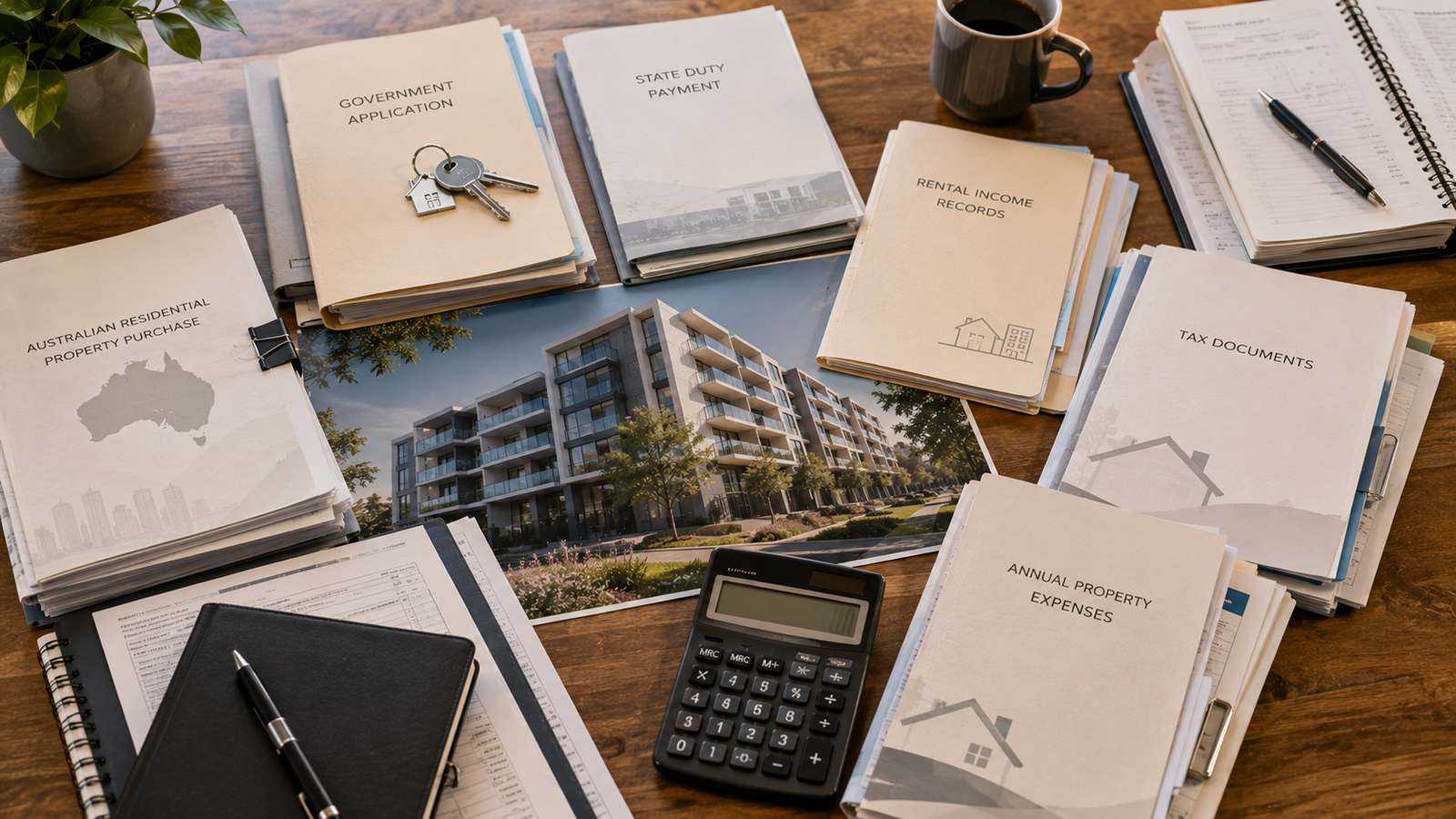
The combined impact of FIRB fees, stamp duty surcharges, a 30% non-resident tax rate on rental income, and potential vacancy fees makes Australia one of the more expensive and complex markets internationally for foreign property investors.
Key Restrictions to Know
The restrictions on foreigners buying property in Australia go beyond fees and taxes. Several structural limitations apply regardless of budget or buyer intent.
Established Home Ban
The most significant restriction on foreigners buying property in Australia is the near-total ban on purchasing established residential dwellings. An established dwelling is any home that has previously been sold or occupied. This covers the overwhelming majority of properties listed on the Australian market at any given time.
Non-resident foreign investors are entirely prohibited from purchasing established homes in Australia under current FIRB policy. This restriction applies regardless of property value, location, or investment intent. Violating this rule results in forced divestment orders requiring the property to be sold within a defined period.
Vacancy Land Rules
Foreigners can buy property in Australia in the form of vacant land for residential development, subject to FIRB approval and development conditions. The FIRB typically imposes conditions requiring construction to begin within a specified timeframe, usually 24 months from approval.
If construction is not commenced within the required timeframe, the FIRB approval may lapse, and the foreign owner may be required to divest the land. These conditions add complexity and timeline risk to vacant land purchases by foreign investors.
Approval for vacant land purchases is generally easier to obtain than for established homes, making this the most accessible entry point for foreigners wanting to buy property in Australia as a new development.
Temporary Resident Rights
Temporary residents represent a special category for foreigners buying property in Australia. Holders of temporary visas, including skilled worker, student, and other temporary status visas, can purchase one established dwelling without FIRB approval in some circumstances, provided they use it as their principal place of residence.
However, temporary residents cannot rent out this property to generate investment income. They must notify the ATO and sell the dwelling when their visa expires or when they leave Australia permanently. This makes temporary resident property ownership a lifestyle purchase rather than an investment vehicle.
The temporary resident rules confirm that foreigners can buy property in Australia as a home to live in. They cannot, however, use it as an investment property generating rental income during their stay.
Dubai vs Australia Compared
For foreign investors evaluating their options, the contrast between buying property in Australia and buying property in Dubai could not be more stark in 2026.
Freehold Rights Compared
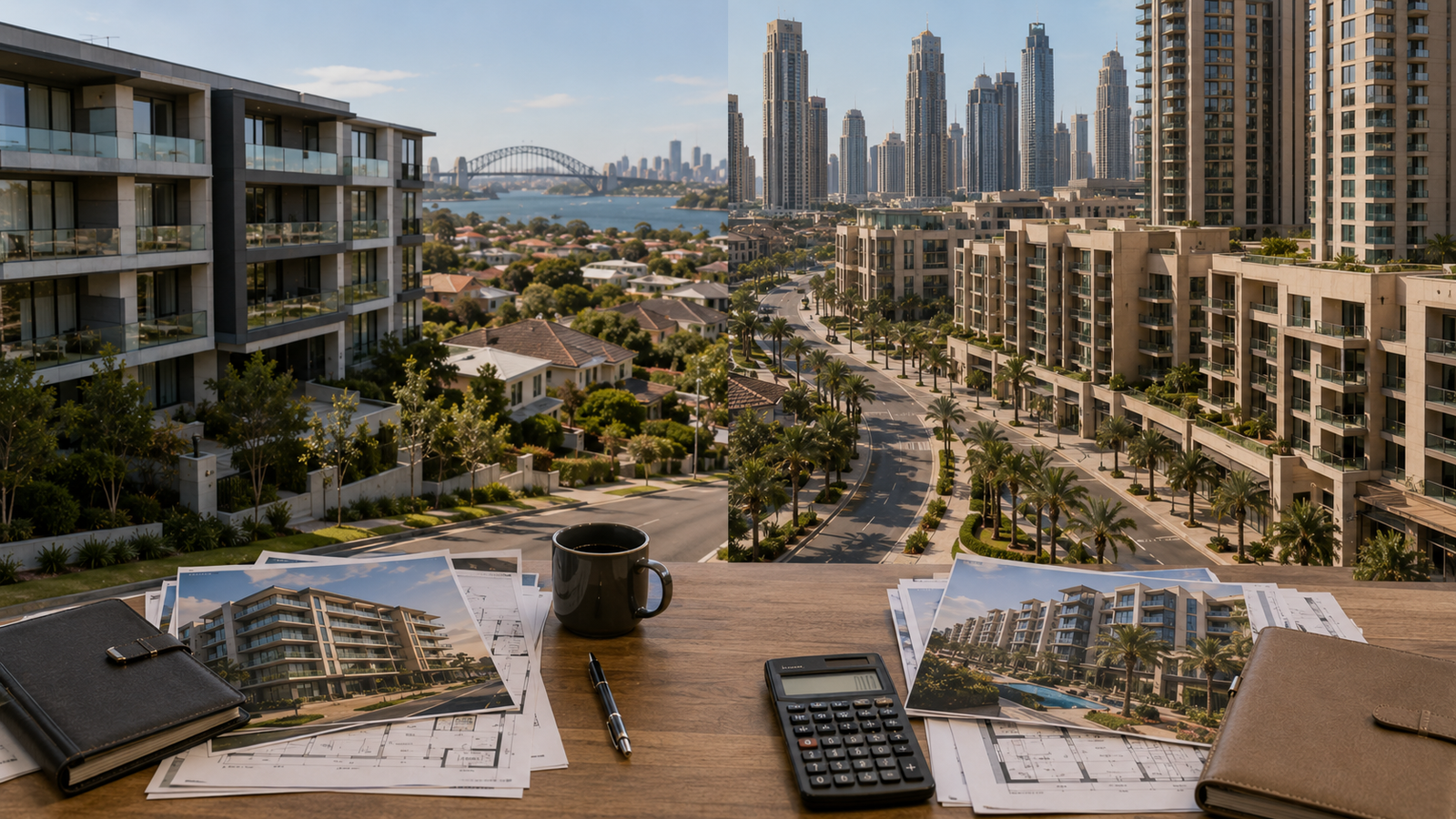
Foreigners can buy property in Australia only in newly built dwellings and under strict conditions. Dubai grants full freehold ownership rights to all foreign nationals in over 60 government-designated zones with no restrictions based on visa status, nationality, or property type, according to Dubai Land Department regulations.
There are no FIRB equivalent approvals in Dubai. No construction conditions apply to off-plan purchases. No mandatory divestment rules exist when the buyer changes residence. Title deeds are permanently registered with the Dubai Land Department and remain valid indefinitely regardless of where the owner lives. For a full overview of Dubai freehold ownership rights, read our guide on Dubai freehold properties for foreigners.
Tax Differences Explained
The tax contrast between buying property in Australia as a foreigner and buying Dubai property is equally significant. Australia taxes non-resident rental income at a flat 30% with no tax-free threshold. Capital gains on Australian property sales by non-residents are taxable with no CGT discount eligibility.
Dubai charges zero income tax on rental earnings, zero capital gains tax on resale, and zero stamp duty on any purchase. According to Dubai Land Department Q1 2026 data, gross rental yields of 7 to 12% in Dubai's top investment precincts are retained almost entirely by the foreign investor. The only transaction cost in Dubai is a 4% Dubai Land Department transfer fee, compared to 10 to 13% total stamp duty exposure for foreigners buying property in Australia.
Entry Points Available
The cost of entry for foreigners buying property in Australia versus Dubai reveals another significant advantage for the UAE market. New dwellings eligible for foreign purchase in Australian capital cities typically start from AUD 600,000 to AUD 800,000 in most markets, before FIRB fees and stamp duty surcharges are applied.
Dubai property for sale in prime investment zones starts from approximately AUD 243,000 for studio apartments in JVC and Dubai South, according to Dubai Land Department transaction records. Interest-free developer payment plans with 10% deposits reduce the upfront capital requirement to approximately AUD 24,000 at entry level. No FIRB equivalent fee applies. No stamp duty surcharge applies.
For foreign investors with AUD 250,000 to AUD 500,000 available, Dubai offers significantly more accessible and better-yielding options than the restricted new-build segment available to foreigners buying property in Australia. Read our complete guide on Dubai property for sale for current listings across all budget levels.
Start Investing in Dubai
Foreigners can buy property in Australia, but the process involves strict FIRB approval conditions, state government surcharges of 7 to 8%, a 30% non-resident tax rate on rental income, and near-total restrictions on established residential purchases. For many foreign investors in 2026, the cost and complexity of buying property in Australia makes Dubai a substantially more attractive alternative.
Dubai offers foreign nationals full freehold ownership rights, zero UAE taxation on rental income and capital gains, interest-free payment plans from 10% deposits, and gross rental yields of 7 to 12% in government-regulated precincts. The Dubai Property Expo Australia brings over 100 verified projects from RERA-licensed developers directly to Sydney, Melbourne, Brisbane, and Perth, giving foreign investors direct developer access without flying to the UAE.
Attendance at the Dubai Property Expo Australia is completely free, and there is no purchase obligation on the day. Register your free place today at dubaipropertyexpoaustralia.com.au
Frequently Asked Questions
Can foreigners buy property in Australia without FIRB approval?
No. Foreigners buying property in Australia without FIRB approval is a criminal offence under the Foreign Acquisitions and Takeovers Act. Penalties include forced divestment orders and significant financial penalties. The only exceptions are Australian citizens, permanent residents, and New Zealand citizens who are fully exempt from FIRB requirements.
Can foreigners buy established homes in Australia?
Generally no. Non-resident foreign investors cannot buy established residential dwellings in Australia under current FIRB policy. Temporary residents may purchase one established home as a principal place of residence but cannot rent it out and must sell it when leaving Australia permanently.
How much does FIRB approval cost for foreigners buying property in Australia?
FIRB application fees for residential property range from AUD 4,200 for properties under AUD 75,000 to AUD 28,200 for properties valued between AUD 1 million and AUD 2 million. Fees scale further for higher-value properties. These fees are non-refundable and must be paid before any purchase proceeds.
What stamp duty do foreigners pay when buying property in Australia?
Foreigners buying property in Australia pay standard stamp duty plus a foreign buyer surcharge. Surcharges range from 7% in Queensland and Western Australia to 8% in New South Wales and Victoria. Total stamp duty exposure for foreign buyers in Sydney or Melbourne typically reaches 12 to 13% of the purchase price.
Is Dubai easier than Australia for foreign property investment?
Yes, significantly. Foreigners hold full freehold ownership rights in Dubai with no FIRB equivalent approval required, no stamp duty surcharge, zero income tax on rental earnings, and zero capital gains tax on resale. Entry prices start from AUD 243,000 with interest-free developer payment plans from 10% deposits. The Dubai Property Expo Australia gives foreign investors direct access to over 100 verified Dubai projects across Sydney, Melbourne, Brisbane, and Perth.